Rue Mouffetard
Your Complete Guide to Paris's Historic Market Street
Rue Mouffetard Market
Market street vs Street market
Rue Mouffetard is both a market street, and a street market. What does that mean? Parisians have always been keen on fresh foods, and being in the city access has been limited since medieval times. Every day farmers and producers from the agricultural lands around the city would come into particular streets to sell their wares. Hence a market within a street.
But with the growing civilization of the city there have been rules set about market cleanliness and behavior for hundreds of years, and gradually market stalls were cleaned up and producers moved into shop fronts. These streets full of shops selling fresh produce are Market streets and while Paris has many it is without doubt that rue Mouffetard is the premier market street of the city.
In his novel A Movable Feast the American author Ernest Hemmingway called the street a "that wonderful narrow crowded market street which led into the Place Contrescarpe". To him it was a market street, but then he lived in the northern part just steps from Place Contrescarpe, while the street stalls of the produce market are at the far southern end at Square Saint-Médard.
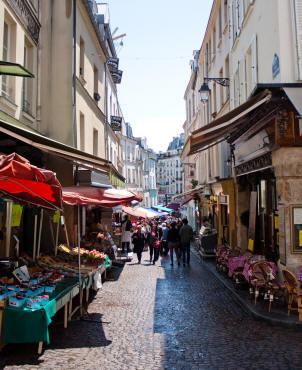
Photo: "Rue Mouffetard" by Fil.Al (fbohac), CC BY 2.0, via Flickr.
While you are there don't miss a look inside the church itself, appreciate the fountain in the center of the traffic circle and of course pop in to the Mouff branch of The House of Androuet, the premier fromageries of Paris. Don't just look at the 200 types of cheese, but step back and observe the beautiful painted exterior of the building itself at 134 rue Mouffetard.
Opening Hours
No opening hours are published for the street's stalls — they are the food shops' own étalages and keep those shops' hours. Go on a morning: the shops open through the morning and set their produce out in front of their own doors, and the trade gives way to lunch. Check the shop windows (and the individual shops' own hours) before you build a day around it.
Opening Days
No one publishes trading days or hours for the stalls on Rue Mouffetard: they are set out by the food shops at the lower end of the street, and they keep those shops' hours. Go in the morning — that is when the street is dressed for trade — and check the shop windows before you build a day around it. If you want a market whose days are actually published, the nearest is Marché Monge on Place Monge: Wednesday and Friday 07:00–13:30, Sunday 07:00–14:30, closed the other days (Ville de Paris, paris.fr, checked November 2026).
Map / Location
At the southern end of the street, right outside the church, is where you will find the market stalls selling produce. But of course don't miss walking up the street to see the many other shops of the market street many of which have open air frontages with stalls in the pedestrian street extending the market experience for hundreds of meters.
Metro stop
Closest Metro stop to the market stalls is Censier - Daubenton. The closest bus line is
Featured Vendors & Specialty Shops 2026
💡 Insider Shopping Tips
Rue Mouffetard is a working shopping street: the food shops keep their own hours, and the produce stalls at the lower end are set out by those shops. No one publishes a timetable for the street's stalls — no days and no hours — so check before you travel. Bring a reusable market bag and cash for smaller vendors. Paris's food markets — including all three in the 5th — are closed on Mondays.
Poissonnerie Quoniam (139 Rue Mouffetard)
This legendary fishmonger has anchored the southern end of the market for generations, its gleaming displays of fresh catches creating a visual feast that captures the essence of Parisian market culture. The artistry lies not just in the selection—Dover sole resting on crushed ice beside ruby-red mullet and silvery sea bass—but in the daily theater of commerce that unfolds here. Watch as vendors arrange their displays with an eye for both freshness and beauty, creating compositions that food photographers travel from across the city to capture.
The fishmonger's expertise extends far beyond simple sales; ask for preparation suggestions for unfamiliar catches, or observe the quick, practiced movements as they clean and fillet selections for local customers who have shopped here for decades. Pricing typically ranges from €10-€20 per kilogram for standard selections, with premium items and seasonal specialties commanding higher prices. The morning selection transforms throughout the day as the finest pieces are chosen by discerning locals, leaving afternoon visitors with different but still excellent options.
📸 Photography Golden Hour
Visit in the hour after sunrise for the most dramatic light: the low sun rakes the eastern side of the street. In Paris the sun rises between about 05:47 in June and 08:41 in December, so check the time for your dates. Whether the stalls are out is a separate question — the shops set them out when they open, and nobody publishes that.
The House of Androuet (134 Rue Mouffetard)
Founded in 1909 by Henri Androuët, who would become France's most celebrated cheese ambassador and the man who named the beloved triple-cream Brillat-Savarin cheese, this fromagerie represents more than a century of dedication to the art of cheese-making and aging. The current generation of cheesemongers continues this legacy with the same passion for excellence, offering expert guidance whether you're selecting a simple everyday cheese or curating an elaborate plateau for a special occasion.
Step inside to discover more than 200 varieties of cheese arranged in temperature-controlled cases, each at perfect ripeness for immediate enjoyment. The knowledgeable staff speaks multiple languages and delights in educating visitors about the terroir, production methods, and optimal serving suggestions for each selection. Prices for artisanal cheeses typically range from €15-€25 per kilogram, with rare and aged varieties commanding premium prices.
Don't miss the building's decoratively painted exterior, a masterpiece of traditional Parisian market street architecture that serves as a beloved landmark for visitors navigating the area. The artistic facade represents the pride these merchants take in their craft and their contribution to the cultural heritage of the neighborhood.
Maison Caffet (137 Rue Mouffetard)
The newest jewel in Rue Mouffetard's crown, Maison Caffet opened in July 2024 just as Paris prepared to welcome the world for the Olympics. This elegant boutique brings seven decades of chocolate-making excellence to the historic market street, continuing Pascal Caffet's tradition of combining bold innovation with meticulous French craftsmanship.
The shop's windows display chocolate creations that blur the line between confection and art: hand-painted bonbons, delicate macarons in seasonal flavors, and sculptural pralines that demonstrate why French chocolatiers are revered worldwide. Individual macarons cost €2-€5, while premium chocolate selections range from €25-€40 for artfully arranged gift boxes.
Inside, the modern aesthetic respects the historical character of the street while providing a perfect backdrop for the colorful arrays of confections. Seasonal specialties change throughout the year—spring brings Easter-themed creations, summer focuses on lighter, fruit-forward flavors, autumn celebrates harvest ingredients like chestnuts and pears, and winter features rich, warming spices and traditional holiday treats.
Boulangerie Malineau
Among the finest traditional bakeries on the street, Boulangerie Malineau upholds the exacting standards that have made French bread the global standard for excellence. Their daily production includes classic baguettes at €1.50 each, artisanal sourdough loaves, and seasonal specialties that reflect the baker's creativity within traditional frameworks.
Arrive early for the warmest bread, still bearing the subtle smokiness from the stone ovens. The bakers begin their work before dawn, ensuring that the first customers of the day receive bread that captures the full complexity of proper fermentation and expert technique. Beyond everyday loaves, watch for seasonal specialties like pain aux noix during autumn or holiday breads enriched with dried fruits and spices during winter months.
⚠️ Market Schedule Alert
Paris's food markets — including all three in the 5th — are closed on Mondays. No timetable is published for the Rue Mouffetard stalls themselves, so go on a morning and treat them as a bonus; for a guaranteed market, Marché Monge on Place Monge trades Wednesday and Friday 07:00–13:30 and Sunday 07:00–14:30.
Additional Specialty Vendors
The market's charm extends beyond these headline attractions to include dozens of smaller specialists, each bringing their own expertise to the street. L'Épicerie du Monde offers spices and international ingredients that reflect Paris's cosmopolitan character. La Maison du Miel presents honey varieties from across France, allowing visitors to taste the diverse terroirs of the country. Fontaine aux Vins curates selections from small producers, with staff who possess encyclopedic knowledge of French wine regions and can recommend perfect pairings for any meal.
These smaller vendors often provide the most intimate shopping experiences, where conversations develop over shared appreciation for quality ingredients and traditional methods. Many have served the same families for generations, creating relationships that extend far beyond simple commercial transactions.
📱 See Rue Mouffetard in Action
Experience the vibrant atmosphere of "La Mouffe" through the eyes of local food enthusiasts. This Instagram reel showcases why Parisians consider this one of their favorite market streets:
Discover what makes Rue Mouffetard special through the eyes of food enthusiasts who know Paris best. Follow @femme_foodie for more authentic Parisian food experiences.
2026 Updates and Practical Information
Recent Improvements: Construction work that enhanced the street's accessibility and infrastructure was completed in August 2025, improving the overall visitor experience. The market continues to attract both locals and visitors with its authentic atmosphere and diverse offerings.
When to Come: no timetable is published for the street's stalls — no days and no hours — so plan the street, not the market: the food shops keep their own hours and set the stalls out in front of their own doors. The nearest municipal market is Marché Monge on Place Monge: Wednesday and Friday 07:00–13:30, Sunday 07:00–14:30, closed the other days (Ville de Paris, paris.fr, checked November 2026). Paris's food markets — including all three in the 5th — are closed on Mondays.
Seasonal Highlights: Spring brings the finest produce selections and pleasant shopping weather. Summer extends outdoor dining and café culture along the street. Autumn offers harvest specialties and comfortable temperatures. Winter focuses on comfort foods, artisanal preserves, and the cozy atmosphere of traditional Parisian market culture.
Transportation & Accessibility 2026
🚇 Metro & Transport Guide
Closest Metro: Censier-Daubenton (Line 7) - Note: stairs only, not wheelchair accessible
Accessible Option: Cardinal Lemoine (Line 10) - 8-minute walk, wheelchair accessible
Bus Routes: Line 47 (Place Monge), Lines 67 & 89 (low-floor, wheelchair accessible)
Reaching Rue Mouffetard has become increasingly convenient with 2026 transportation improvements. The closest metro station, Censier-Daubenton on Line 7, places you within steps of the market's heart, though visitors requiring wheelchair access should note that this station features stairs only. For accessible transportation, Cardinal Lemoine station on Line 10 offers full wheelchair facilities and connects to the market via an pleasant 8-minute walk through the historic Latin Quarter streets.
Bus transportation provides excellent accessibility with multiple lines serving the area. Bus 47 stops at Place Monge, the closest point to the upper reaches of Rue Mouffetard. Lines 67 and 89 offer low-floor boarding and wheelchair accessibility, connecting from various points across Paris including Boulevard Saint-Germain and République.
The cobblestone streets that give Rue Mouffetard its historic character can present challenges for visitors with mobility aids. While the main thoroughfare remains relatively smooth, side streets and market areas feature traditional uneven stones. Many vendors have adapted their stalls to be more accessible, though no one publishes how busy the street will be, so judge it on the day you are there.
Shopping Like a Local: Insider's Guide
📋 Market Shopping Checklist
- Bring cash (many vendors prefer small bills)
- Pack a sturdy reusable shopping bag
- Come on a morning — the shops are opening and setting their produce out in front of them
- Learn basic French greetings for vendor interactions
- Allow extra time — no one publishes how busy the street will be, so give yourself room to stop and to check each shop's door
Shopping on Rue Mouffetard requires understanding the rhythm and etiquette that govern traditional French market culture. Vendors appreciate customers who greet them with a polite "Bonjour" and engage respectfully in the selection process. Many are pleased to offer recommendations and share knowledge about their products, particularly during slower periods when they have time for extended conversations.
The market operates on a daily fresh inventory model, meaning the finest selections disappear quickly. Serious shoppers arrive early not just for the best choice, but to participate in the morning ritual that has defined this street for centuries. Watch for visual cues—the way vendors arrange their displays, the pride they take in presenting their goods, and the easy familiarity between merchants and regular customers who have shopped here for decades.
Payment customs vary by vendor, with many traditional merchants preferring cash transactions, especially for smaller purchases. Credit cards are increasingly accepted, but carrying small bills demonstrates respect for local customs and ensures smooth transactions. Bargaining is not typical on Rue Mouffetard; prices reflect the quality and care that vendors put into their selections. For what a visit actually costs — metro fares, observed produce prices and guided-tour rates — see the Rue Mouffetard prices and fees guide.
Seasonal Market Calendar & Events
Each season brings distinct character to Rue Mouffetard, transforming both the products available and the street's atmosphere. Spring awakens the market with the year's first asparagus, delicate spring onions, and the renewed energy of vendors who have weathered the quiet winter months. This is when café terraces reopen, flower displays return to storefronts, and the street begins its transformation into the bustling outdoor living room that defines Parisian summer.
Summer months see extended evening hours as restaurants expand their outdoor seating and the street becomes a stage for impromptu performances and social gatherings. Vendors adapt their offerings to include more items suitable for picnics and outdoor dining, while cafés perfect their terrace service for the influx of visitors seeking authentic Parisian experiences.
Autumn brings perhaps the market's finest hour, when harvest specialties from across France appear in vendor stalls. This is the season for wild mushrooms, new wines, chestnuts roasted on street corners, and the return of hearty stews and comfort foods that warm both body and spirit as temperatures cool.
Winter reveals the market's most intimate character, when local residents become the primary customers and vendors focus on preserved specialties, artisanal products, and the kinds of foods that sustain communities through the darker months. This season offers visitors the most authentic glimpse into how Rue Mouffetard functions as a true neighborhood resource rather than simply a tourist destination.
🎯 Perfect Visit Timing
For variety and atmosphere, come on a morning — the shops are open and setting their produce out in front of their own doors. The street's stalls carry no published timetable, so treat a full run of them as a bonus.
Photography & Social Media Guide
Rue Mouffetard offers endless opportunities for capturing the essence of Parisian market culture, but the best photographs require understanding both the lighting and the social dynamics of the street. The most dramatic light comes in the hour after sunrise, when the low sun streams down the narrow street and throws the shadows that give depth to market photography — in Paris the sun rises between about 05:47 in June and 08:41 in December, so check the time for your dates.
Respect for vendors and customers should guide all photography. Many merchants are proud of their displays and welcome photographers, especially during quieter moments when they can engage with visitors interested in their craft. Ask permission before photographing people, and be mindful that locals are conducting their daily shopping, not performing for cameras.
The most compelling images often emerge from patient observation of the street's natural rhythms—vendors arranging their morning displays, customers examining produce with practiced eyes, the interplay of tradition and modernity that defines contemporary French market culture. Social media content performs best when it captures authentic moments rather than staged scenes.
Key photography spots include the fish displays at Poissonnerie Quoniam, the colorful exterior of The House of Androuet, the artful chocolate arrangements at Maison Caffet, and the broader street views from elevated positions near Place de la Contrescarpe. Each location offers different lighting conditions and compositional opportunities throughout the day.
Before you come with a camera — or simply to see what you are walking into — see what the market looks like, section by section in our photo walk, from Place de la Contrescarpe down to the church of Saint-Médard.
For more inspiration and tips for experiencing Rue Mouffetard like a local, explore our comprehensive guides to foods and specialties and food tours in the area.