Rue Mouffetard
Your Complete Guide to Paris's Historic Market Street
Rue Mouffetard Market in Photos
Rue Mouffetard is short — roughly 600 metres — and in places barely seven metres wide. It begins at Place de la Contrescarpe at the top of the hill and runs downhill to the church and square of Saint-Médard at the bottom. The outdoor food stalls sit at that lower, southern end, outside the church; the rest of the street is a market street in the older sense — butchers, greengrocers, cheesemongers, bakers and cafés packed into ground floors either side of a narrow, mostly pedestrian lane. The photographs below follow the street in that order, top to bottom, so you can see each stretch as you will walk it. Every image is a real view of the street, captioned with where it was taken and when it was taken — several are a few years old, and the captions say so.

Image: "Rue Mouffetard.JPG" by LPLT, CC BY-SA 3.0, via Wikimedia Commons — Rue Mouffetard.JPG
Place de la Contrescarpe: the top of the street
The street is centred on Place de la Contrescarpe, at the junction with Rue Lacépède; above the square the lane becomes Rue Descartes at the crossing of Rue Thouin. The square is open, with the cafés set back behind their terraces and a fountain in the middle, and it is where the street's character changes: above the square the crowd is local and unhurried, below it the pavement narrows and the shopfronts begin. Ernest Hemingway, who lived a few steps north of the square, called Rue Mouffetard "that wonderful narrow crowded market street which led into the Place Contrescarpe"; his The Sun Also Rises opens a chapter with a taxi coming down the street from this square.
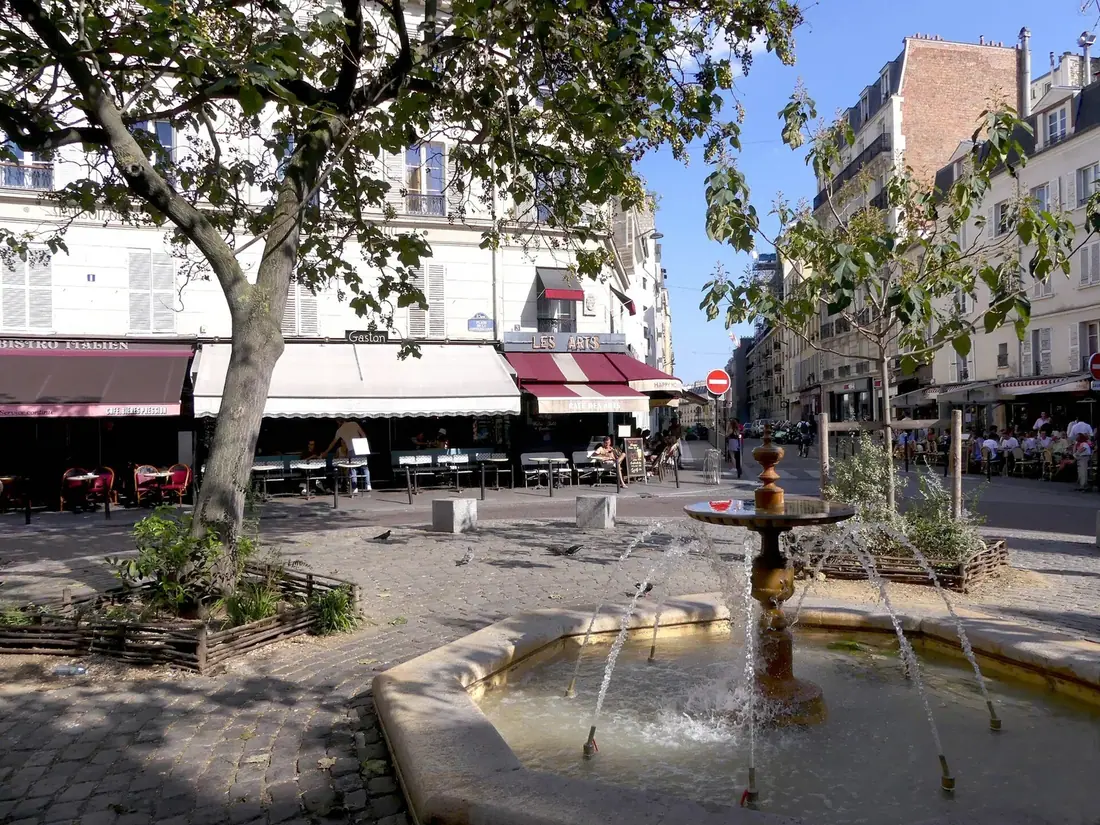
Image: "Place et fontaine de la Contrescarpe à Paris (septembre 2023).JPG" by Florian Pépellin, CC BY-SA 4.0, via Wikimedia Commons — Place et fontaine de la Contrescarpe à Paris (septembre 2023).JPG
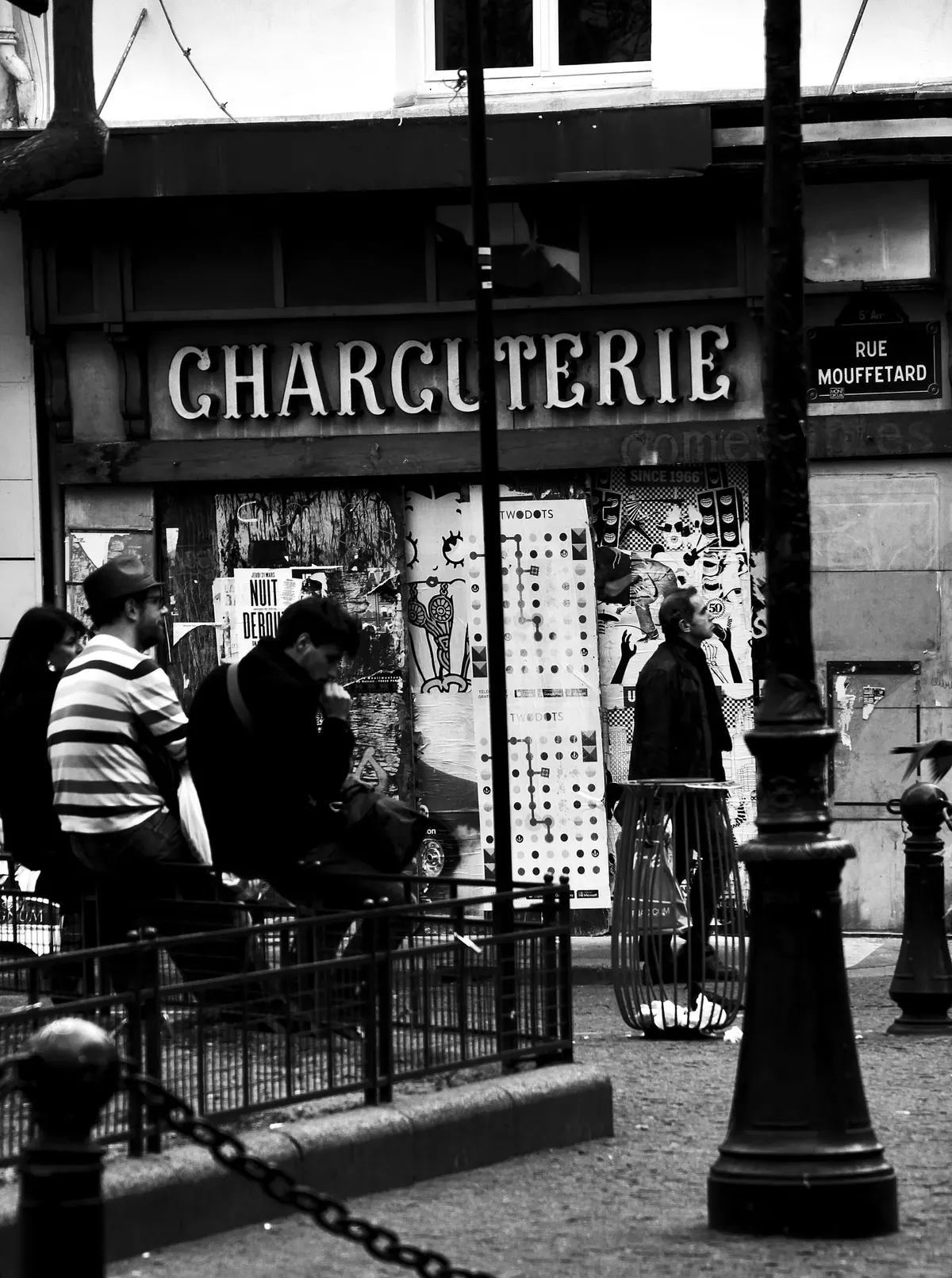
Image: "Charcuterie Rue Mouffetard (26091715724).jpg" by Guillaume Baviere, CC BY-SA 2.0, via Wikimedia Commons — Charcuterie Rue Mouffetard (26091715724).jpg
The upper stretch: shopfronts and the restaurant row
Walking down from the square, the first thing the photographs show is how completely the street is built over with trade. There is no setback, no courtyard, no gap: ground floor after ground floor of small shopfronts, each with its own sign, awning or painted façade, and the upper floors leaning in above them. This is the stretch where eating places dominate — the crêperie at No. 68 and the restaurants whose menus are fixed to the wall outside. Because the lane is so narrow and slopes downhill, the signs and awnings repeat into the distance in a way that photographs flatten into a single colourful surface.
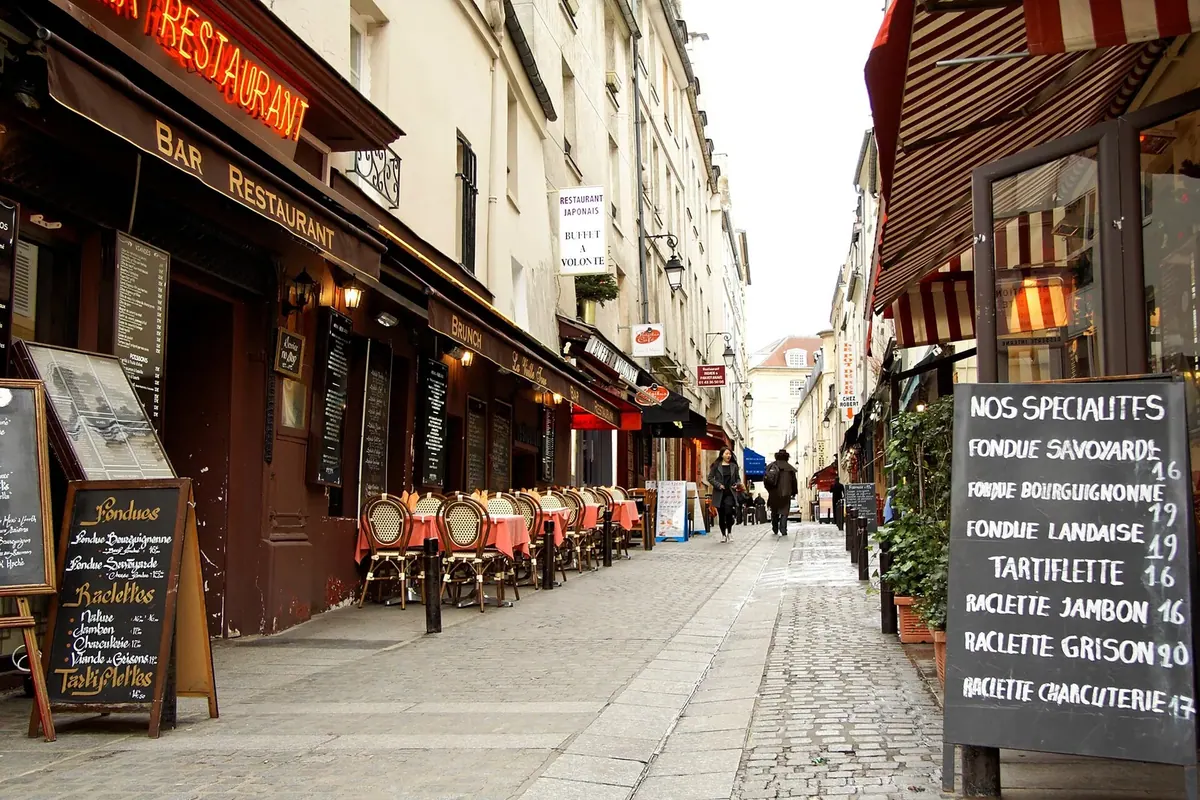
Image: "Les restaurants de la rue Mouffetard (Paris 5).jpg" by besopha, CC BY-SA 2.0, via Wikimedia Commons — Les restaurants de la rue Mouffetard (Paris 5).jpg
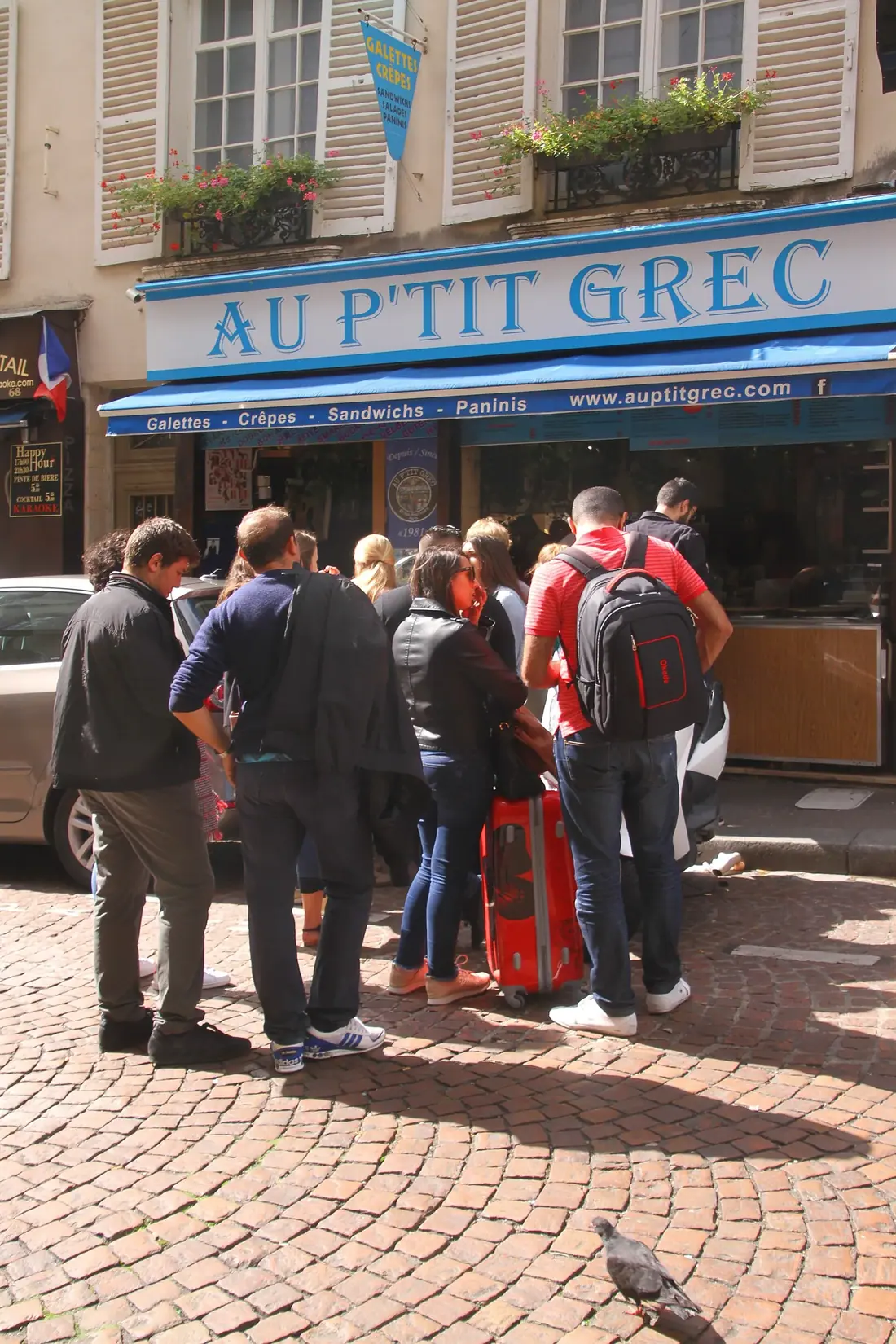
Image: "Paris-Rue Mouffetard-160-nr 68-Au p'tit Grec-2017-gje.jpg" by Gerd Eichmann, CC BY-SA 4.0, via Wikimedia Commons — Paris-Rue Mouffetard-160-nr 68-Au p'tit Grec-2017-gje.jpg
The lower market stretch: where the stalls are
This is the part of the street that answers the question "what does the market actually look like". The outdoor stalls stand at the bottom, around and outside the church of Saint-Médard — not along the whole length of the street. Everything above them is the permanent market street; the stalls are the movable part, and they are the part that photographs so differently depending on when you turn up.

Image: "Paris - 129 rue Mouffetard - Le Papillon - 20130510 (1).jpg" by Olybrius, CC BY-SA 4.0, via Wikimedia Commons — Paris - 129 rue Mouffetard - Le Papillon - 20130510 (1).jpg

Image: "Market, Mouffetard, Paris 15 October 2009.jpg" by Suvodeb Banerjee, CC BY 2.0, via Wikimedia Commons — Market, Mouffetard, Paris 15 October 2009.jpg
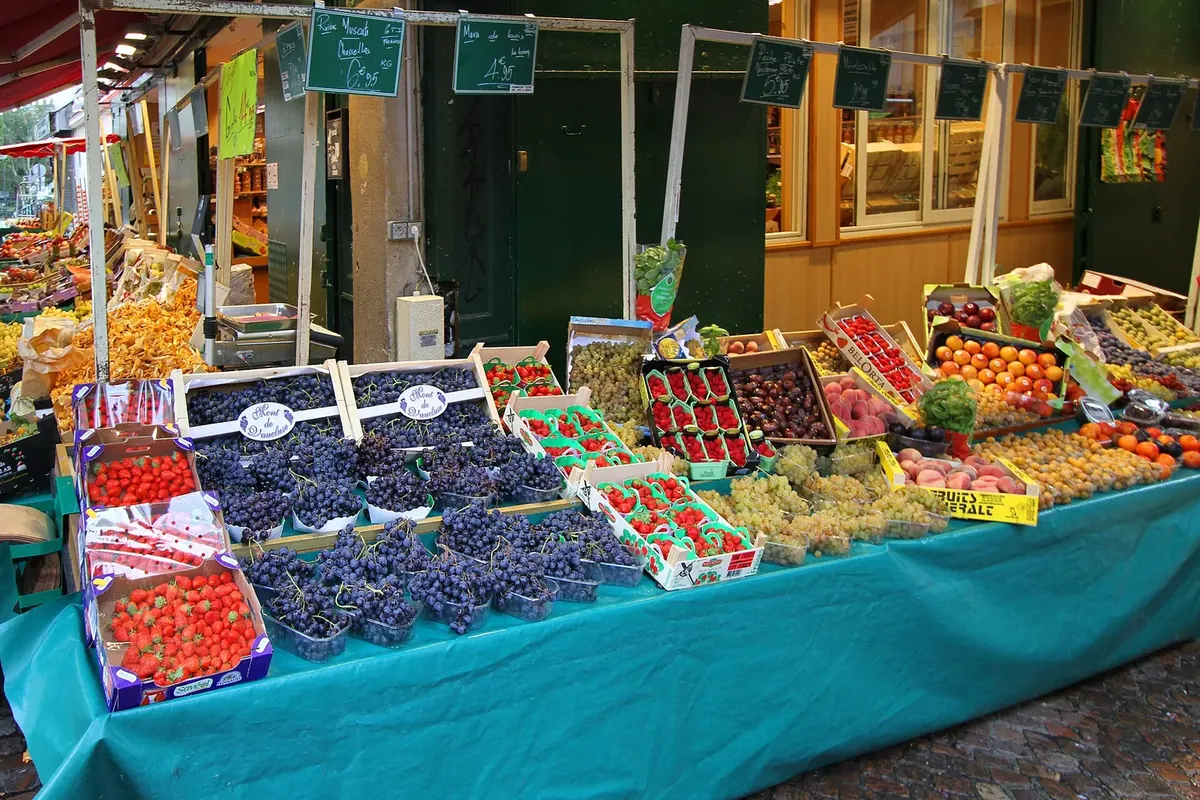
Image: "Paris-Rue Mouffetard-152-Fruechte-2017-gje.jpg" by Gerd Eichmann, CC BY-SA 4.0, via Wikimedia Commons — Paris-Rue Mouffetard-152-Fruechte-2017-gje.jpg
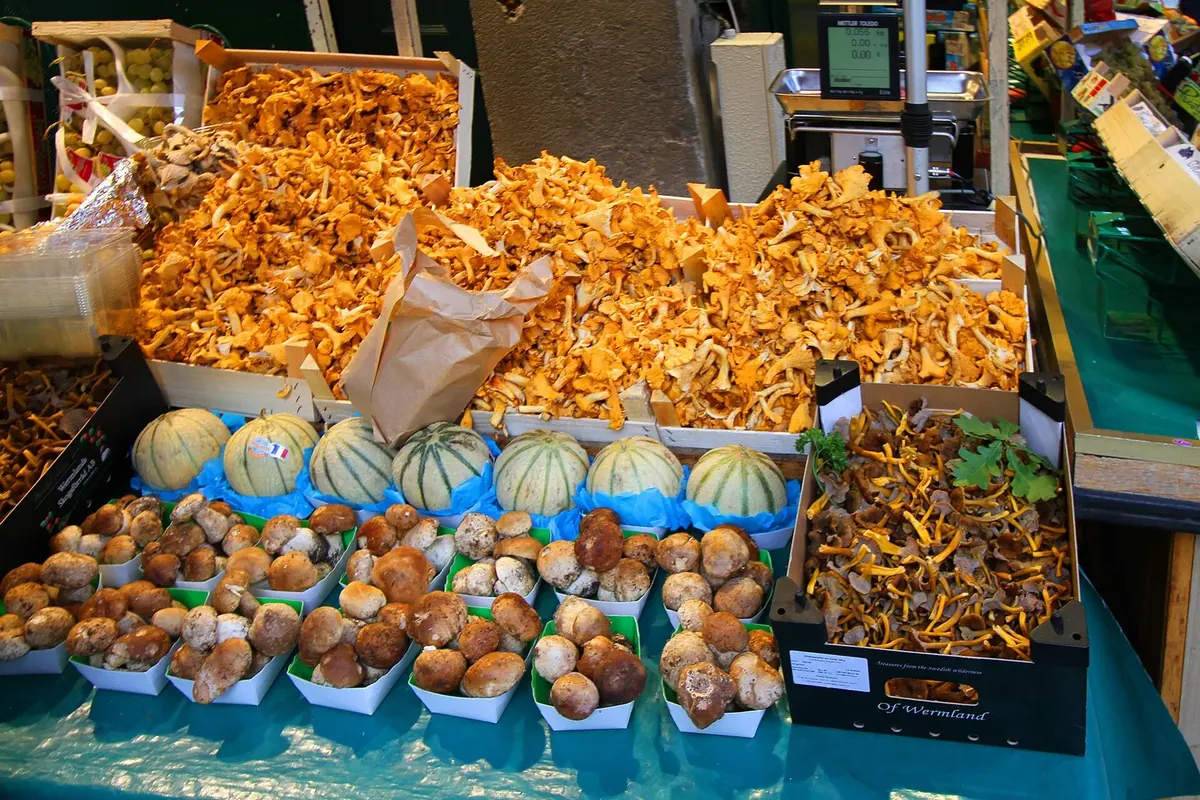
Image: "Paris-Rue Mouffetard-150-Pilze-2017-gje.jpg" by Gerd Eichmann, CC BY-SA 4.0, via Wikimedia Commons — Paris-Rue Mouffetard-150-Pilze-2017-gje.jpg
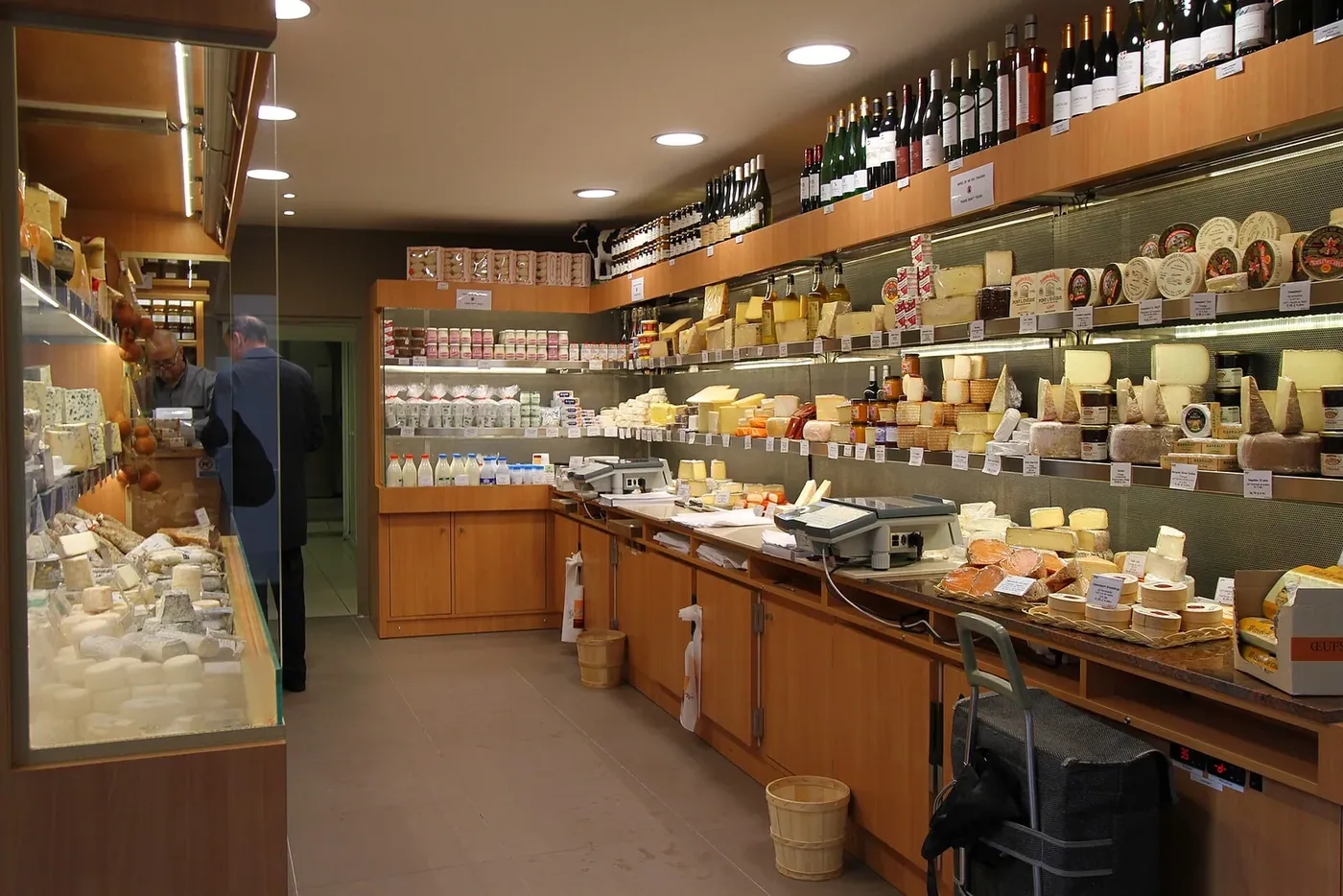
Image: "Paris-Rue Mouffetard-108-Kaese-2017-gje.jpg" by Gerd Eichmann, CC BY-SA 4.0, via Wikimedia Commons — Paris-Rue Mouffetard-108-Kaese-2017-gje.jpg
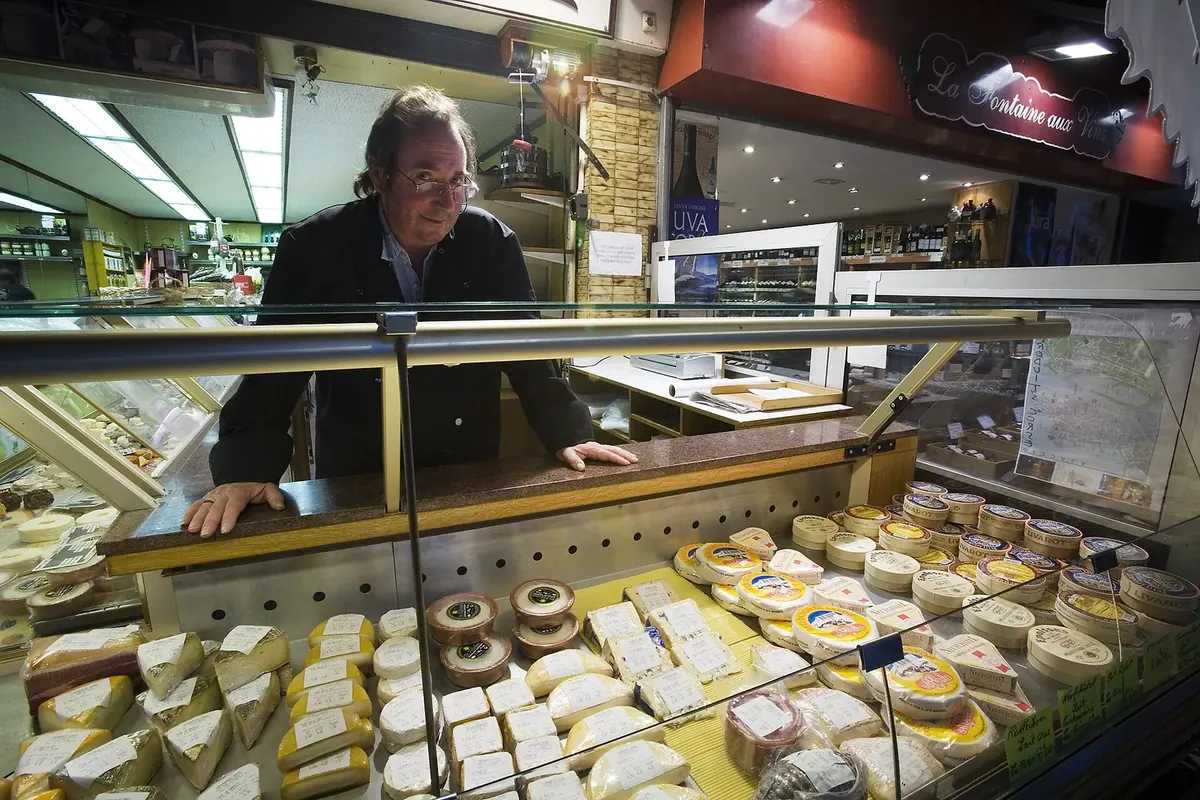
Image: "Paris - Cheese seller, Rue Moufetard - 3397.jpg" by Jorge Royan, CC BY-SA 3.0, via Wikimedia Commons — Paris - Cheese seller, Rue Moufetard - 3397.jpg
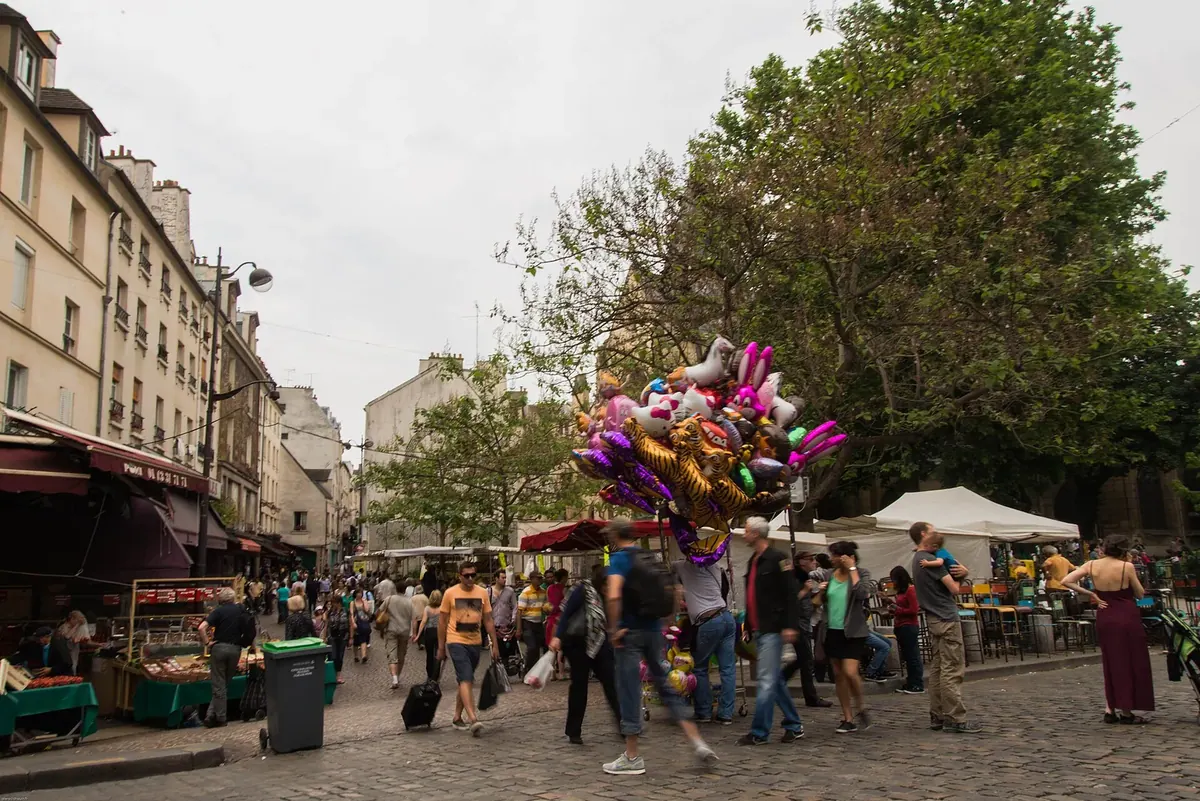
Image: "Le bas de la rue Mouffetard - Paris (France).jpg" by Inocybe/Piero d'Houin, CC BY-SA 3.0, via Wikimedia Commons — Le bas de la rue Mouffetard - Paris (France).jpg
The photographs also show the difference between the market and the street it happens on. With the stalls up, the lower half of the lane is a working food market grouped by product as you walk it — produce first, then the specialist displays of cheese, mushrooms, charcuterie and fish that the shops put out beside the stalls, awnings running shoulder to shoulder and the pavement reduced to a single-file gap. With the stalls packed away, the same stretch is simply a row of permanent shops, and that is the version most photographs labelled "Rue Mouffetard" actually show: the lane in the afternoon, the crowd gone, the pavement empty.
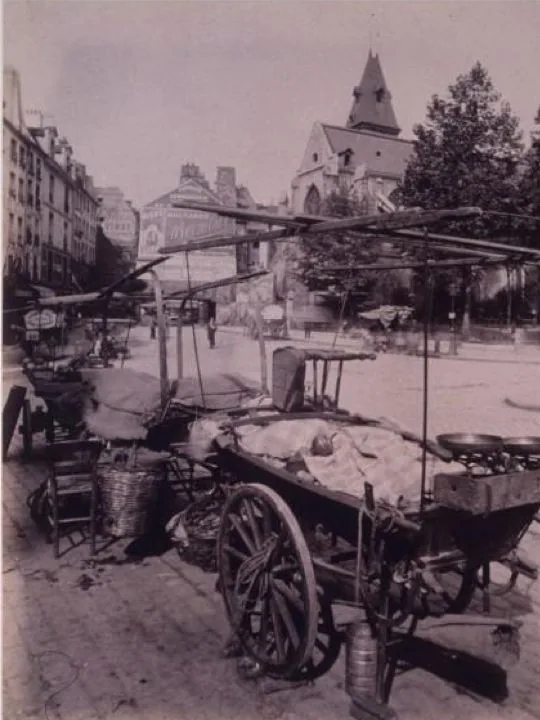
Image: "Marché de la rue Mouffetard.jpg" by Eugène Atget (1910), Public domain, via Wikimedia Commons — Marché de la rue Mouffetard.jpg
Square Saint-Médard and the church: the bottom of the street
The walk ends at the church. Rue Mouffetard's southern terminus is at Square Saint-Médard, and the stalls stand outside the church that gives the square, the quarter and half the faubourg their name. The church began as the centre of the Bourg Saint-Médard in the Middle Ages; the settlement around it was only absorbed into the city of Paris in 1724, by which time the road it stood on was already centuries old — this is one of the oldest routes in Paris, a Roman road running south out of the city. That is why the street looks the way it does: it sits on the flank of the Montagne Sainte-Geneviève, which kept Haussmann's redevelopment away and left the old narrow frontages intact.
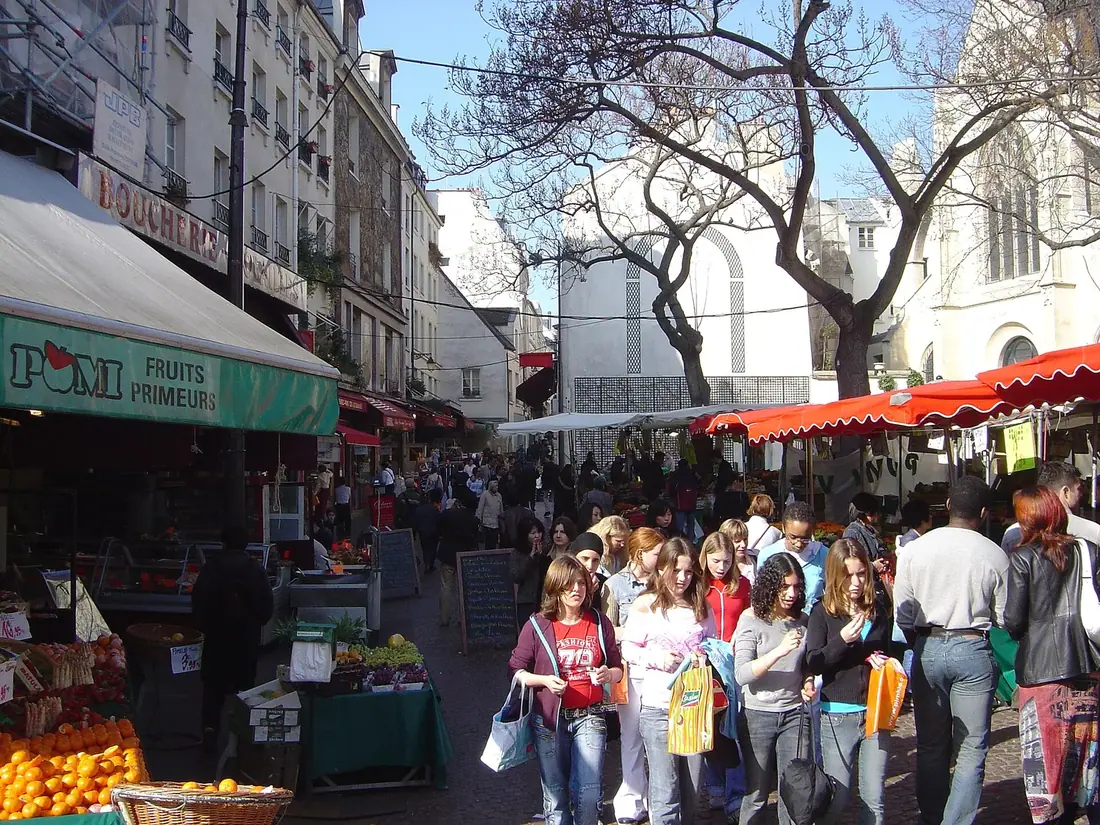
Image: "Street market rue Mouffetard St Medard dsc00727.jpg" by David Monniaux, CC BY-SA 3.0, via Wikimedia Commons — Street market rue Mouffetard St Medard dsc00727.jpg
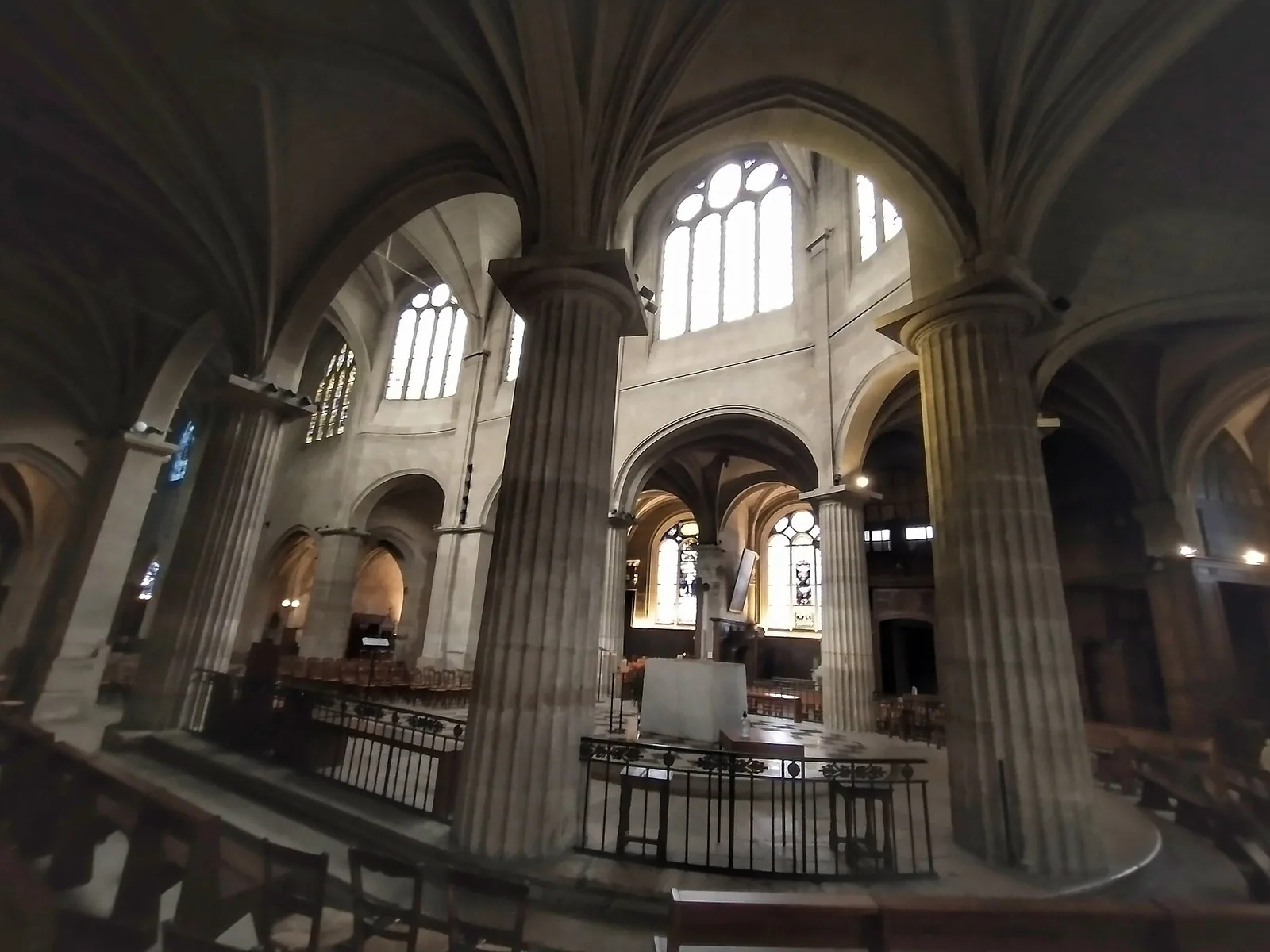
Image: "Église Saint-Médard (Paris) 2023 r. 01.jpg" by MOs810, CC BY 4.0, via Wikimedia Commons — Église Saint-Médard (Paris) 2023 r. 01.jpg
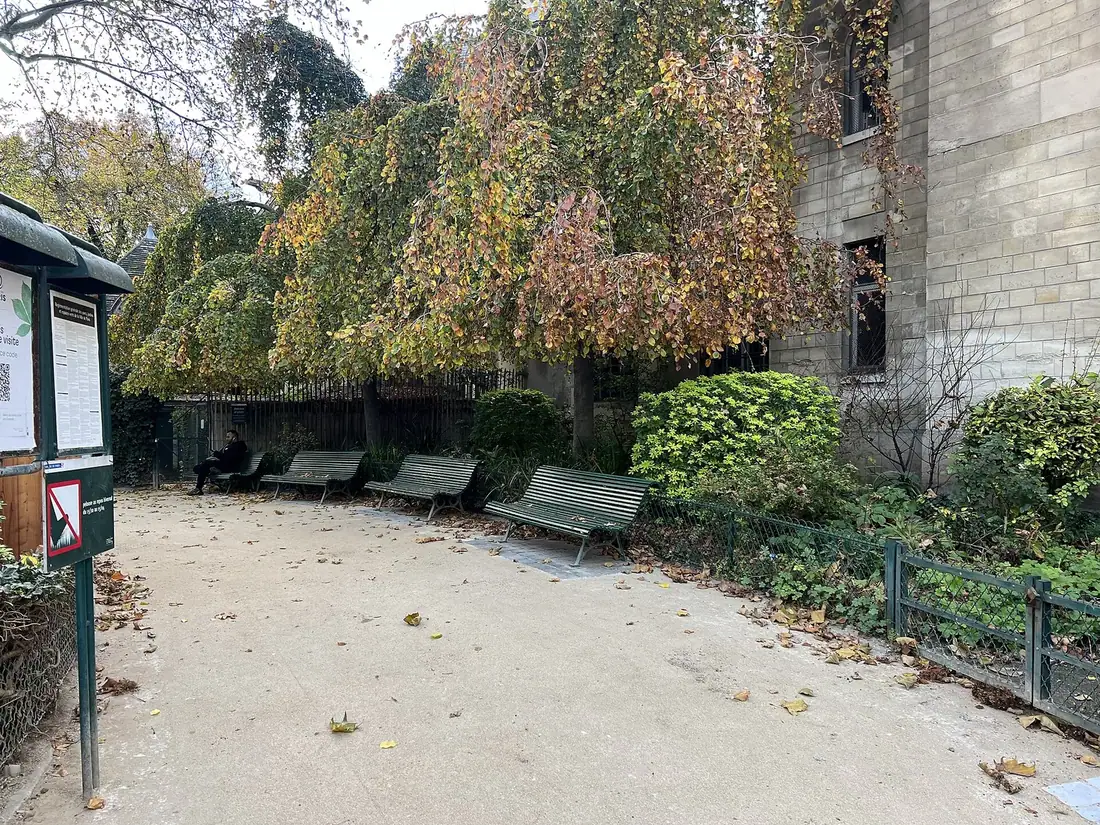
Image: "Square Saint Médard - Paris V (FR75) - 2023-11-25 - 1.jpg" by Chabe01, CC BY-SA 4.0, via Wikimedia Commons — Square Saint Médard - Paris V (FR75) - 2023-11-25 - 1.jpg
When each shot happens
The street photographs completely differently depending on the hour, because the stalls come and go and everything else stays. For Rue Mouffetard itself, our market days guide gives the practical pattern as Tuesday to Sunday, roughly 08:00–13:00, with only a few traders remaining until about 13:30, and closed on Monday. The guide also notes that Rue Mouffetard is absent from the City of Paris market register, so the City's official timetable does not verify these hours. Nearby markets have their own schedules: Maubert and Port-Royal trade until 14:30 on Saturdays and are closed on Sundays.
| Time | What the street looks like | Notes |
|---|---|---|
| Early morning | Stalls going up, deliveries, shopfronts still shuttered | Before 9am many shops are not open; some are not fully operational until about 10am |
| Mid-morning | The market at full width — the photograph at the top of this page | Widest choice and the calmest light; Saturday late morning is the busiest window of the week |
| Early afternoon | Stalls packed away; permanent shops still trading | Maubert and Port-Royal trade until 14:30 Saturdays; both are closed Sundays |
| Afternoon & Monday | A narrow shopping lane with no outdoor market | Stalls do not reopen after lunch; Monday is the closed day for the stalls |
If you mean to photograph the street yourself, light is the other half of the timing problem. Check the sunrise time for your visit date and plan around the actual light rather than relying on a fixed seasonal clock-time window; the market's busy mid-morning period gives you people and colour, though the light may be flatter. Our photography guide covers composition and timing in more detail. Whichever hour you choose, ask before photographing anyone: this is a neighbourhood doing its weekly shopping, not a set. Weekend mornings are the busiest and the most photogenic; midweek mornings are the calm ones if you want the lane to yourself.
Two caveats about the pictures themselves. First, they span more than a century: the Atget photograph is from 1910, the Gerd Eichmann views from 2017, the square and church from 2023. They show the street's structure and its trade, not today's individual shopkeepers — some of the businesses photographed have changed hands since. Second, no photograph on this page was staged or borrowed from a stock library: every one is a real view of Rue Mouffetard or its immediate surroundings, and every credit is listed at the foot of the page and on our credits page.
Photo index: the street section by section
| Section | What you'll see | Best time | Guide |
|---|---|---|---|
| Place de la Contrescarpe (top) | Open square, fountain, café terraces, the street opening downhill | Any time of day | Place de la Contrescarpe |
| Upper stretch | Painted shopfronts, restaurant row, the sloping lane | Mid-morning to lunch | Food guide 2027 |
| Lower market stretch | Stalls, awnings, tiered produce, cheese, mushrooms, charcuterie, fish | Market mornings, early | The market |
| Market off | The same stretch as a plain old shopping lane | Afternoons and Mondays | Market days |
| Square Saint-Médard (bottom) | The church, the square, market traffic at the terminus | Market mornings | Sunday tradition |
About the images. Photographs by LPLT, Florian Pépellin, Guillaume Baviere, besopha, Gerd Eichmann, Olybrius, Suvodeb Banerjee, Jorge Royan, Inocybe/Piero d'Houin, David Monniaux, Chabe01 and MOs810, used under Creative Commons licences and credited individually beneath each image; the 1910 photograph by Eugène Atget is in the public domain. Licence, author and source for every file are recorded on our credits page.
Getting there and what to do next
The stalls are a couple of minutes' walk from Place Monge (Line 7) and Censier-Daubenton (Line 7). The easiest approach is from the top: arrive at Place de la Contrescarpe and walk downhill, and the street unfolds in the order the photographs above follow — square, shopfronts, market, church. The lane is closed to normal motor traffic for much of the week, so it is a walking route rather than a driving one, and the cobbles and narrow pavements are worth planning around if you are with a pushchair or a wheelchair — see our getting here guide and the street's accessibility page.
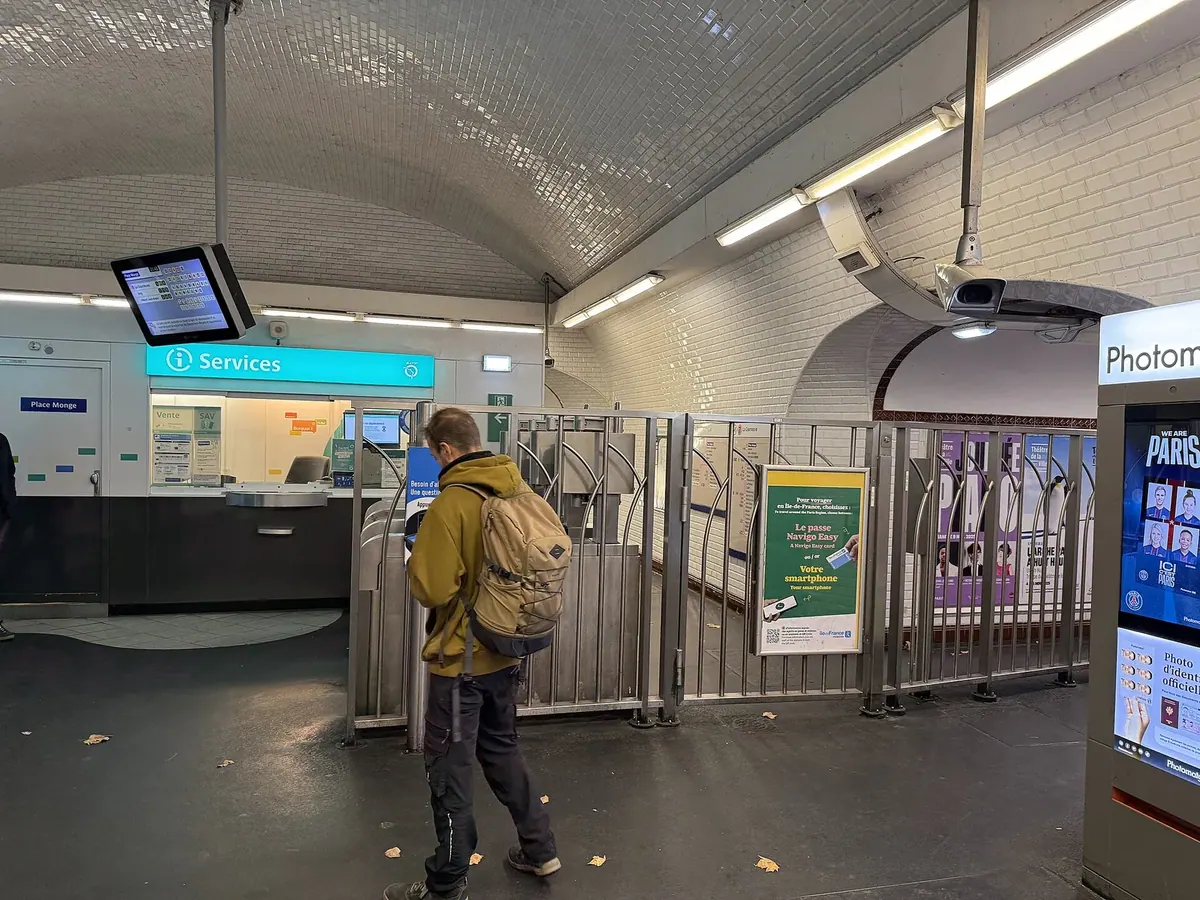
Image: "Station Place Monge Métro Paris - Paris V (FR75) - 2025-10-27 - 1.jpg" by Chabe01, CC BY-SA 4.0, via Wikimedia Commons — Station Place Monge Métro Paris - Paris V (FR75) - 2025-10-27 - 1.jpg
Next: if you want to know when to come, read the best times to visit; if you want to know what to buy, start with the market and the market days guide; if you plan to photograph the street yourself, our photography guide covers where to stand and when the light works.